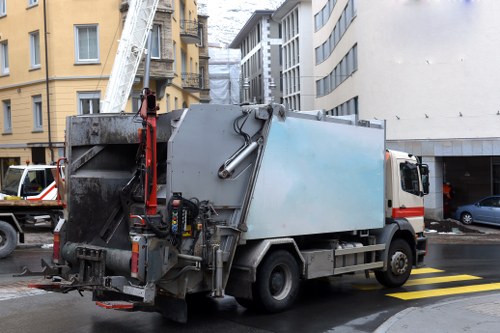
Health and Safety Policy — Commercial Waste Parsons Green
This policy sets out the commitment of our commercial waste operation in Parsons Green to protect employees, contractors, clients and the public. It explains responsibilities, standards and procedures designed to prevent injury and illness and to reduce risks associated with commercial rubbish collection and waste services across our service area. The policy applies to all activities carried out by the rubbish company and to all personnel, both permanent and temporary.Scope and Responsibilities
This policy covers general waste, recycling, hazardous materials and any transfer or storage activities that form part of our commercial rubbish service. Senior management will ensure resources are available to implement the policy, while supervisors and crew leaders are responsible for day-to-day compliance. Every employee has a duty to cooperate, follow instructions and report hazards promptly. The service area obligations include safe access, secure containment and minimising public exposure during collections.
Risk Assessment and Control
We carry out systematic risk assessments for each task and location to identify potential hazards related to waste handling, manual lifting, vehicle movements, sharps and chemical contamination. Risk control measures are selected with the hierarchy of control in mind, prioritising elimination and substitution where possible, followed by engineering, administrative controls and finally personal protective equipment. Exact measures are recorded and reviewed regularly to reflect operational changes.Training, Competence and Personal Protective Equipment
All employees receive induction training and role-specific instruction appropriate to their duties in waste management. Training covers safe lifting techniques, segregation of waste streams, spill response and the correct use of PPE. Personal protective equipment such as gloves, high-visibility clothing, eye protection and respiratory protection where required must be worn. Supervision ensures standards are maintained and refresher training is scheduled to address changing hazards.
Operational Procedures for Waste Handling
Safe work procedures are in place for loading, compacting, transporting and unloading waste. Crews must follow documented procedures for dealing with hazardous or unusual items and immediately isolate or report any suspicious waste. The policy mandates clear segregation of recyclables, general refuse and hazardous material at the point of collection to reduce cross-contamination and to support safe disposal. Vehicles and containment units must be secured to prevent spills and access by unauthorised persons.Vehicle Safety, Mechanical Controls and Emergency Response
Vehicle checks are performed at the start and end of every shift, with mechanical defects reported and repaired before the vehicle returns to service. Mobile plant operations follow strict exclusion zones and use signals and banksmen where necessary. Emergency procedures include spill containment, first aid provision and arrangements with emergency services for incidents involving fire, chemical release or bodily injury.- Pre-shift vehicle inspections
- Emergency contact and response plan
- Spill kits and containment resources
Environmental controls and monitoring are integral to the policy to ensure that waste activities do not cause undue harm. Measures include dust suppression, odour management, and routine audits to check that waste transfer and storage areas meet environmental and safety standards. We conduct regular site inspections and maintain records of incidents, near-misses and corrective actions to drive continuous improvement and to demonstrate compliance with applicable regulatory expectations.

Reporting, Records and Incident Investigation
All incidents, injuries and near-misses related to commercial rubbish collection must be reported promptly and recorded in the incident log. Investigations identify root causes and actions to prevent recurrence. Records of training, risk assessments, maintenance, vehicle checks and waste manifests are retained and made available for review. Transparency and accurate record-keeping support accountability and inform future revisions of procedures.